
Introduction
After nearly 23 years of faithful service in Liberia, reaching, sharing, teaching, and promoting sustainability among pastoral leaders and their families, our singular goal has remained unchanged: to holistically train pastors and church leaders, primarily in rural communities—many of whom have little or no formal education.
Our approach has consistently been non-formal training, carefully tailored to equip our beneficiaries with essential ministry skills that strengthen church health and leadership capacity.
Exactly ten years ago, we intentionally added a new component to our ministry to address economic empowerment, helping pastors and their families remain afloat while faithfully serving the Lord. As we approach our twilight years, the urgency of producing tangible, lasting results cannot be overemphasized.
II. Ministry Reach and Growth
We have continued to reach out, share, teach, and promote self-sustainability across Liberia by establishing ministry networks in Nimba, Montserrado, Bomi, Margibi, and surrounding areas. Over time, the ripple effect of this work has been significant and encouraging.
Prior to our ministry engagement in Liberia, there were approximately five theological institutions offering undergraduate degrees. Today, there are now two key institutions offering graduate-level theological education. Additionally, our campaign to reach across denominational lines to equip pastoral leaders has continued to expand.
It is important to note that nearly 85% of pastoral leaders, though genuinely called by God, still lack the theological foundation necessary to develop and maintain healthy churches. Encouragingly, our campaign has gained traction, with more individuals now actively involved in training pastors throughout the country.
However, our commitment has now expanded to include a significant new component: building truly indigenous churches and pastors who are self-supporting, self-propagating, and self-governing.
SEEDFARMS endeavors to serve as the missing piece of the puzzle—economic empowerment—by providing a locally sustainable source of support for ministry.
III. Pastoral Visitation and Training
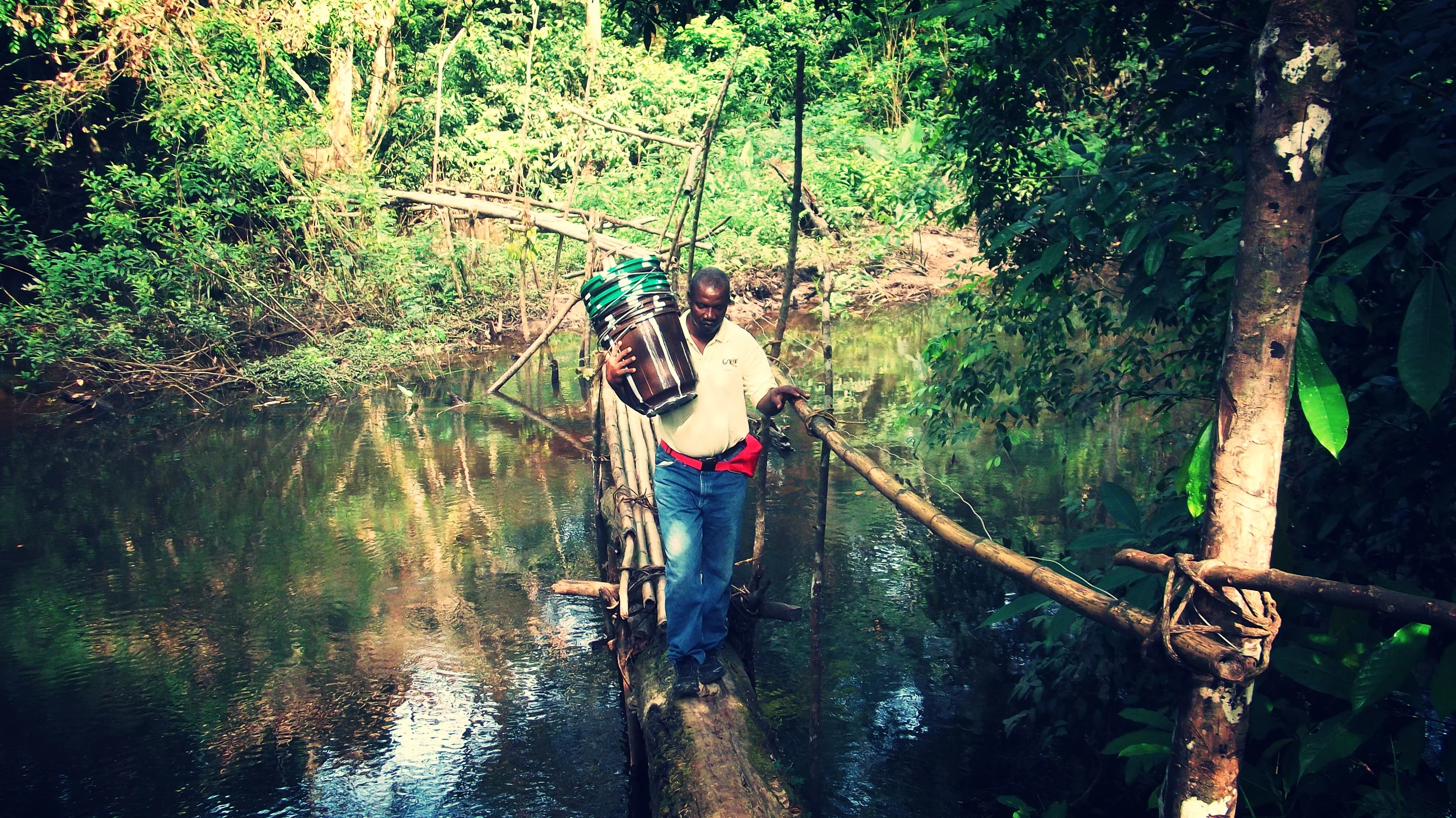
Each year, we visit the various ministry networks established through years of training and equipping pastoral leaders. These visits allow us to follow up, encourage leaders, and strengthen relationships. Recently, we conducted visits in Larkeyta, Margibi, Ganta (Nimba), Todee, and Montserrado.
Community Engagement Highlights
Pilot projects have been established in four communities—Cooper Farm, Gobah Town, Beadi, and Yarkpoah Town—to support pastors within these networks.
In each community, pastors received 22 chickens to raise as an income-generating activity.
Lessons learned from these pilots are being used to strengthen our sustainable support strategy.
A piggery project was launched in Nyema Town and is progressing very well.
The success of these pilot projects has encouraged us to invest further in empowering pastors and their families to remain effective in ministry.
Several years ago, we also launched a work grant program to support underprivileged boys and girls in attending school. Our goal is to increase participation from 50 to 150 students annually, as the Lord provides through our sustainable farm initiative.
Benevolence Support
Health Assistance
We regularly receive requests from pastors seeking assistance during health-related challenges. While resources are limited, we do our utmost to provide help whenever possible.
Food Assistance
We also assist pastors and their families when they lack food. Our long-term goal is to provide seeds instead of rice, enabling self-sufficiency. During the COVID-19 pandemic, we distributed food, chlorine, and other essential non-food items.
IV. Challenges and Needs
Despite progress, significant challenges remain:
A. Economic Hardship
Due to the government’s limited ability to provide job opportunities, extreme hardship persists across the population. Many school-aged children are unable to attend school, while prostitution, drug use, and crime continue to rise. As an organization, our desire is to mitigate these challenges through sustainable initiatives.
B. Poverty Affecting Pastors and Ministries
Abject poverty caused by unemployment continues to affect pastors and rural ministries. Many pastors are forced to spend significant time providing for their families—burning charcoal, tapping rubber, or subsistence farming—leaving little time for ministry preparation.
C. Financial Strain
Because of these overwhelming needs, our ministry is often financially overstretched. It is difficult to walk away when families lack food, individuals are sick, or children are unable to attend school. We respond as much as we are able.
D. Resource Shortages
We face ongoing shortages of volunteers and ministry materials, including Bibles and teaching resources.
E. Safe Drinking Water
Access to safe drinking water remains a challenge in many of the communities we serve. Despite interventions by international partners, significant gaps remain, contributing to ongoing health concerns.
V. Request for Support
Financial Partnership
To move toward sustainability, we are seeking financial support to establish a 25-acre cassava farm to produce local food staples such as Gari and Fufu.
Cost of cultivation: $34,000
Expected first-year income: $62,000
Future potential: With value-added processing in the second year, income could double
This project will generate economic, social, and spiritual benefits for local communities and provide sustainable income to support ministry work locally.
Volunteer Opportunities
We also seek short-term volunteers willing to serve for six months to one year, contributing skills, time, and mentorship to strengthen our work on the ground.
Thanks!
Thank you sincerely for your prayers and faithful support of our family and ministry over the years. As we approach our twilight years, our heart’s desire is to support both our direct beneficiaries (pastors, their families, and ministries) and indirect beneficiaries (communities) in ways that foster a culture of interdependence through honest labor.
We need all hands on deck to make a meaningful difference. We remain committed to building leaders for healthy churches. Rest assured—without you on the team, this work cannot succeed. Teamwork builds quality.